From fire damageto cleanup, drying and rebuild.
A residential fire can create more than visible burn damage. Smoke and soot may spread well beyond the origin area, firefighting water can affect floors and wall cavities, and damaged materials may need selective removal before reconstruction begins. TNT Restoration and Construction helps coordinate the practical path from initial damage through cleanup and build-back across North Houston.
What happens after the fire is out?
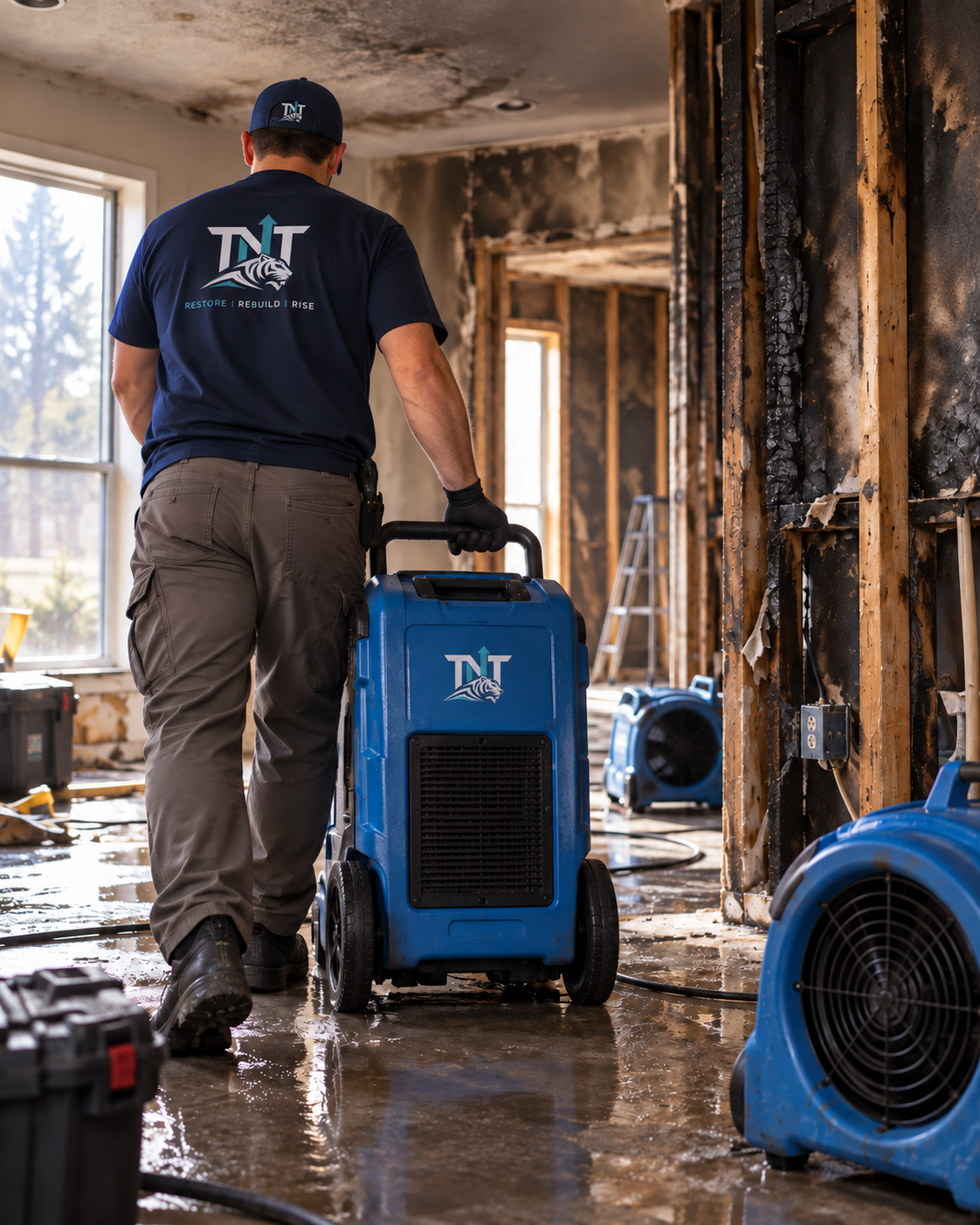
Once the property is safe to enter, the next step is understanding the condition of the structure and contents. Fire damage restoration often combines documentation, moisture evaluation, smoke and soot cleanup, selective demolition, drying, contents handling, and reconstruction.
1. Document the damage
Visible fire, smoke, soot, water, and material damage are documented so the scope can be organized clearly.
2. Control moisture
Water used during suppression may require extraction, moisture checks, air movement, and dehumidification before repairs begin.
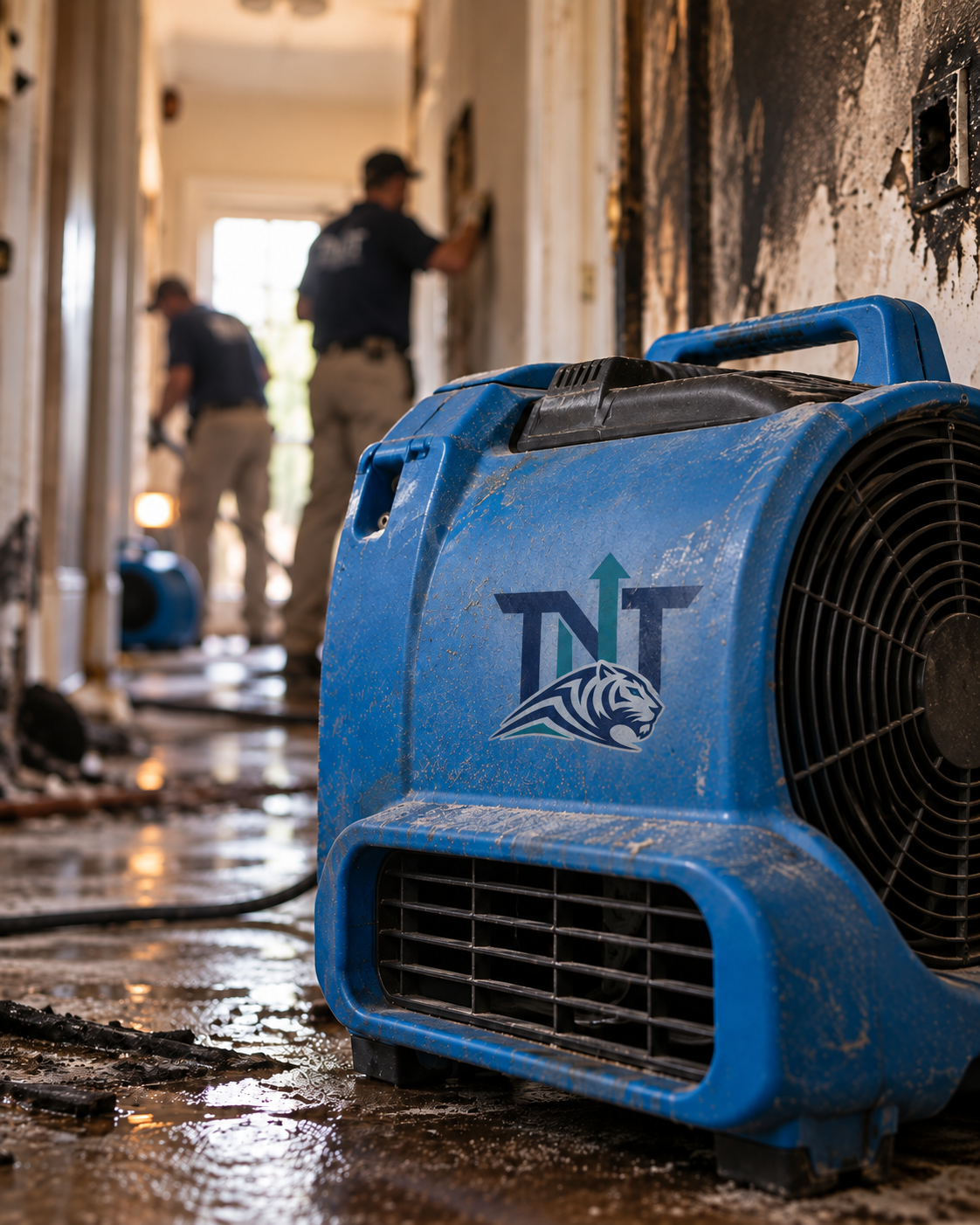
3. Remove unsalvageable materials
Heavily charred or otherwise damaged materials may need selective demolition and disposal while salvageable areas are protected.
4. Clean smoke and soot
Residue can settle on walls, cabinets, fixtures, contents, and nearby rooms. Cleanup methods depend on the surface and severity.
Contents, cleanup and protection
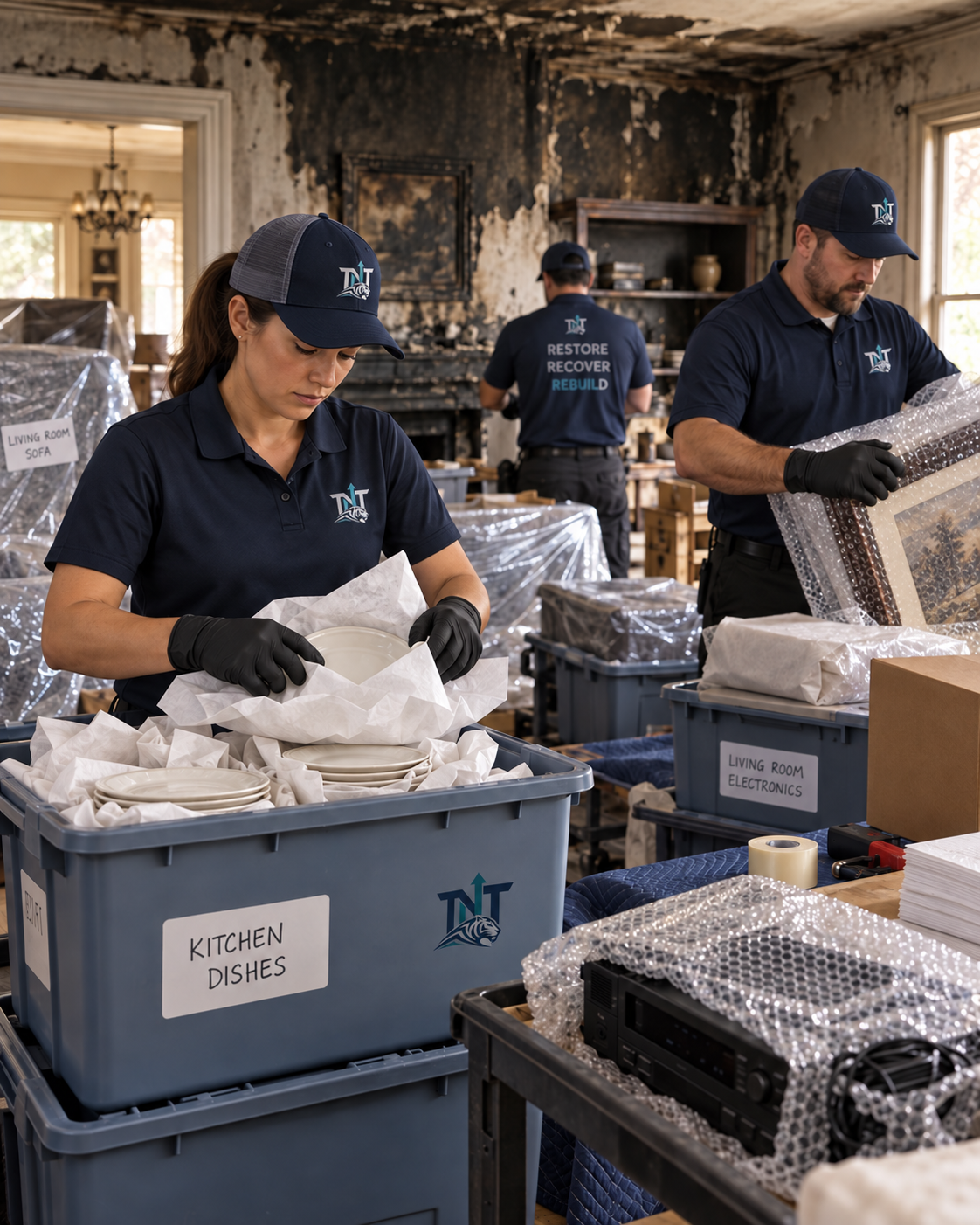
Fire restoration is not only about walls and framing. Furniture, electronics, dishes, artwork, and personal belongings may need to be documented, packed, protected, cleaned, stored, or moved out of the work area so repairs can proceed safely.
Contents pack-out
Items can be inventoried, labeled, packed, and moved out of affected work areas when needed.
Surface cleaning
Appropriate cleaning methods can be selected for soot-affected cabinets, walls, hard surfaces, fixtures, and finishes.
Odor and residue control
Smoke odor and residue may require cleaning, sealing, or replacement depending on the material and degree of exposure.
Work-area protection
Containment and protection help separate damaged work zones from cleaner areas during demolition and rebuilding.
Reconstruction after fire damage
Once cleanup, drying, and selective demolition are complete, the project can transition into reconstruction. TNT can coordinate the repair phase so the same project does not stall between mitigation and build-back.
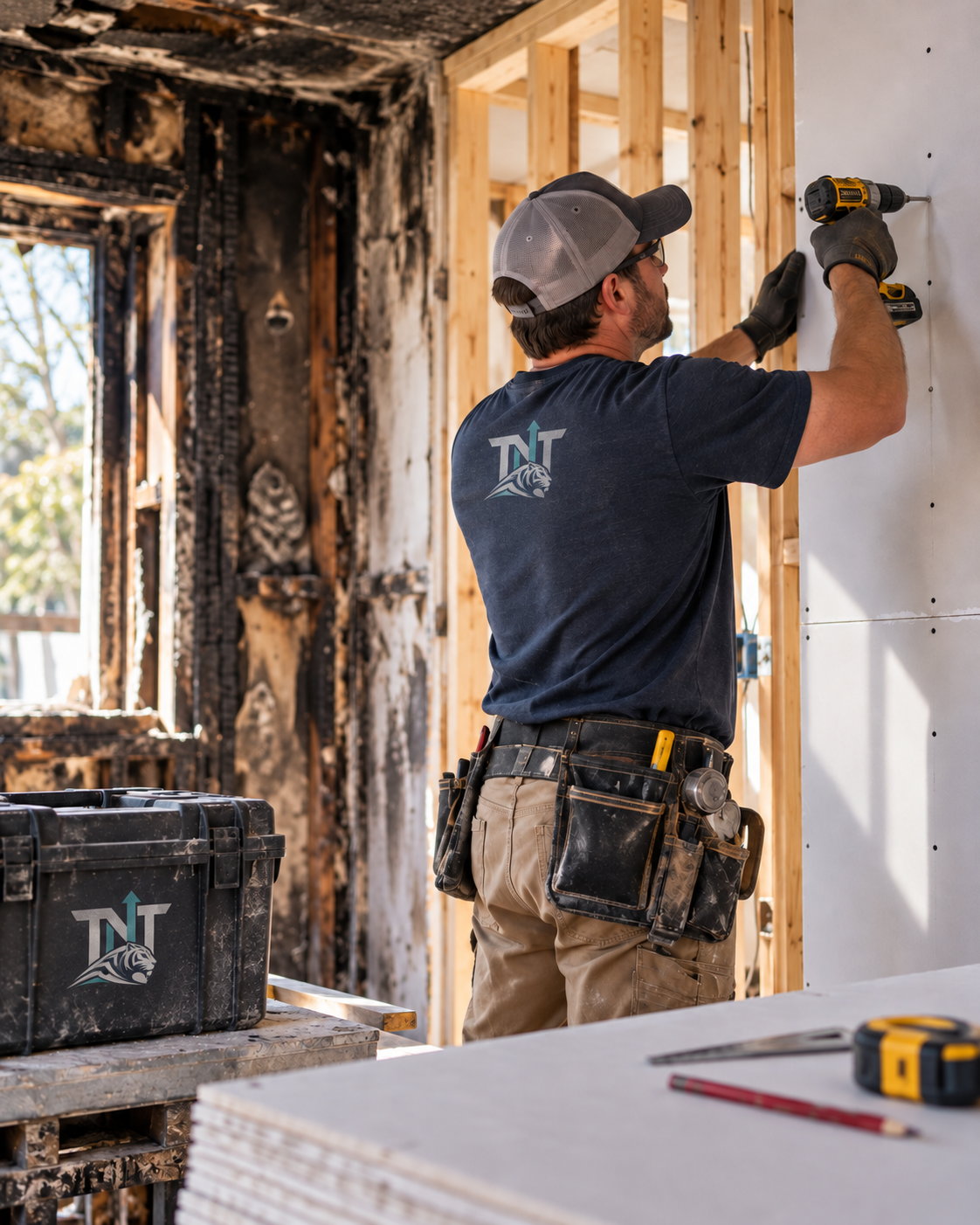
Framing and drywall
Damaged assemblies can be rebuilt with new framing, insulation, drywall, texture, and paint where required.
Flooring and trim
Baseboards, flooring, doors, casing, and finish carpentry can be restored as part of the build-back.
Kitchen and interior finishes
Cabinetry, countertops, fixtures, and other interior components can be addressed during reconstruction.
Final repair coordination
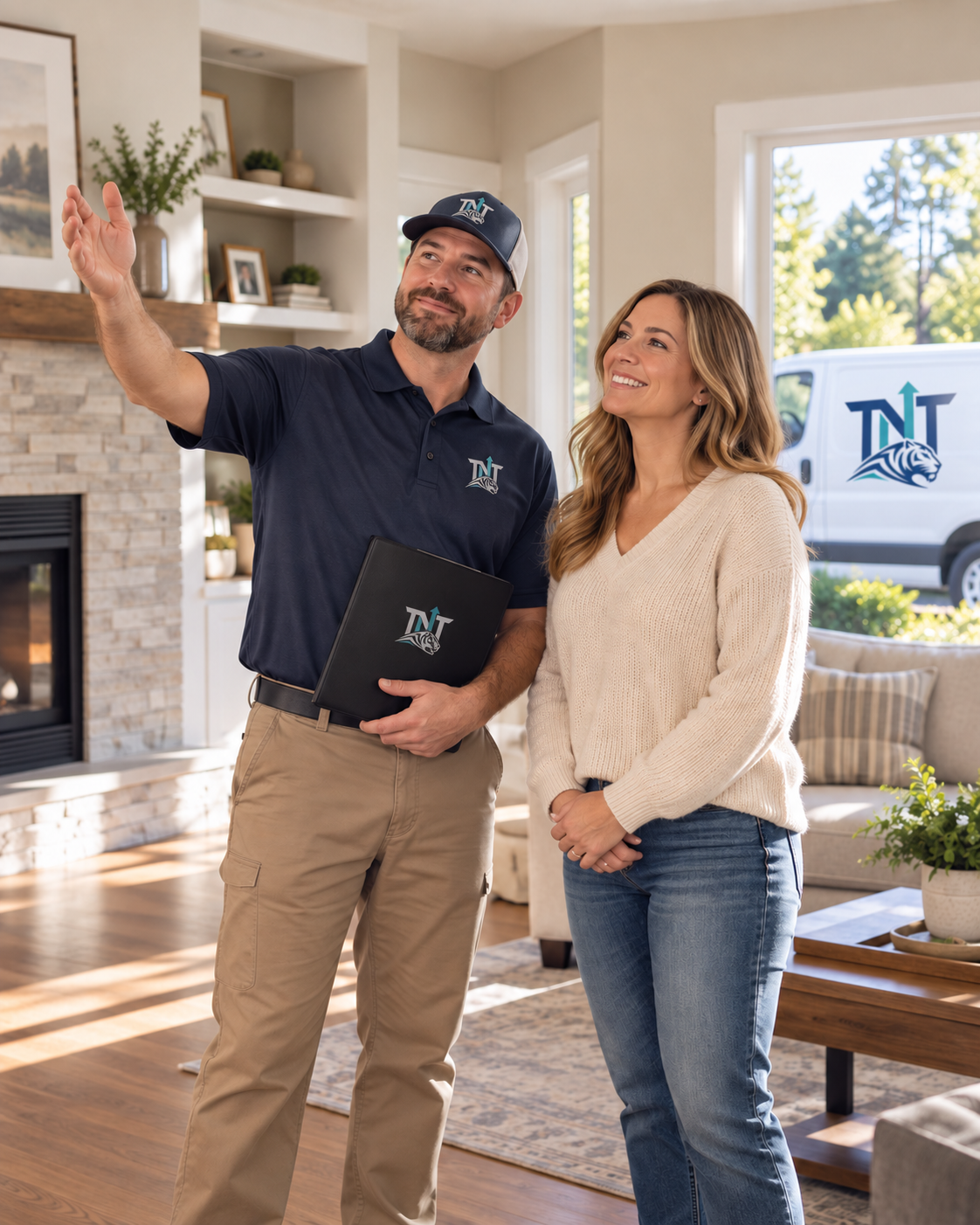
The goal is to move the property from a damaged condition toward a complete, usable finished space.
Fire damage and insurance-related repairs
TNT is a contractor, not a public insurance adjuster. We can provide estimates, photographs, scopes, invoices, and technical repair information for restoration work. Coverage and settlement decisions remain with the insurance company.
For a broader overview of fire and smoke restoration, visit our Fire and Smoke Damage Restoration service page. For residue and odor-specific cleanup, see Smoke & Soot Damage Cleanup. For drying needs after firefighting water or suppression, see Water Mitigation and Structural Drying.
Fire restoration FAQ
Does fire damage restoration include smoke and soot cleanup?
It can. The exact scope depends on the surfaces affected, residue level, heat exposure, and whether materials are cleanable or require removal.
Why is water mitigation sometimes needed after a fire?
Fire suppression can introduce substantial water into flooring, wall cavities, ceilings, and structural materials. Moisture control may be needed before reconstruction.
Can damaged contents be packed out during repairs?
Yes. Contents may be documented, packed, labeled, and moved from active work areas when a pack-out is appropriate for the project.
Can TNT handle reconstruction after cleanup?
Yes. TNT provides reconstruction and build-back services including drywall, flooring, trim, paint, and broader interior repair work.
Need help after a residential fire?
TNT can help organize the cleanup, drying, demolition, and reconstruction path.